Treating every prospect as if it deserves the same time and energy is one of the quieter ways a sales team burns itself out. Account tiering is just the formal name for something most experienced salespeople do instinctively: deciding, quite deliberately, that some accounts are worth a lot more of your week than others.
What account tiering actually means
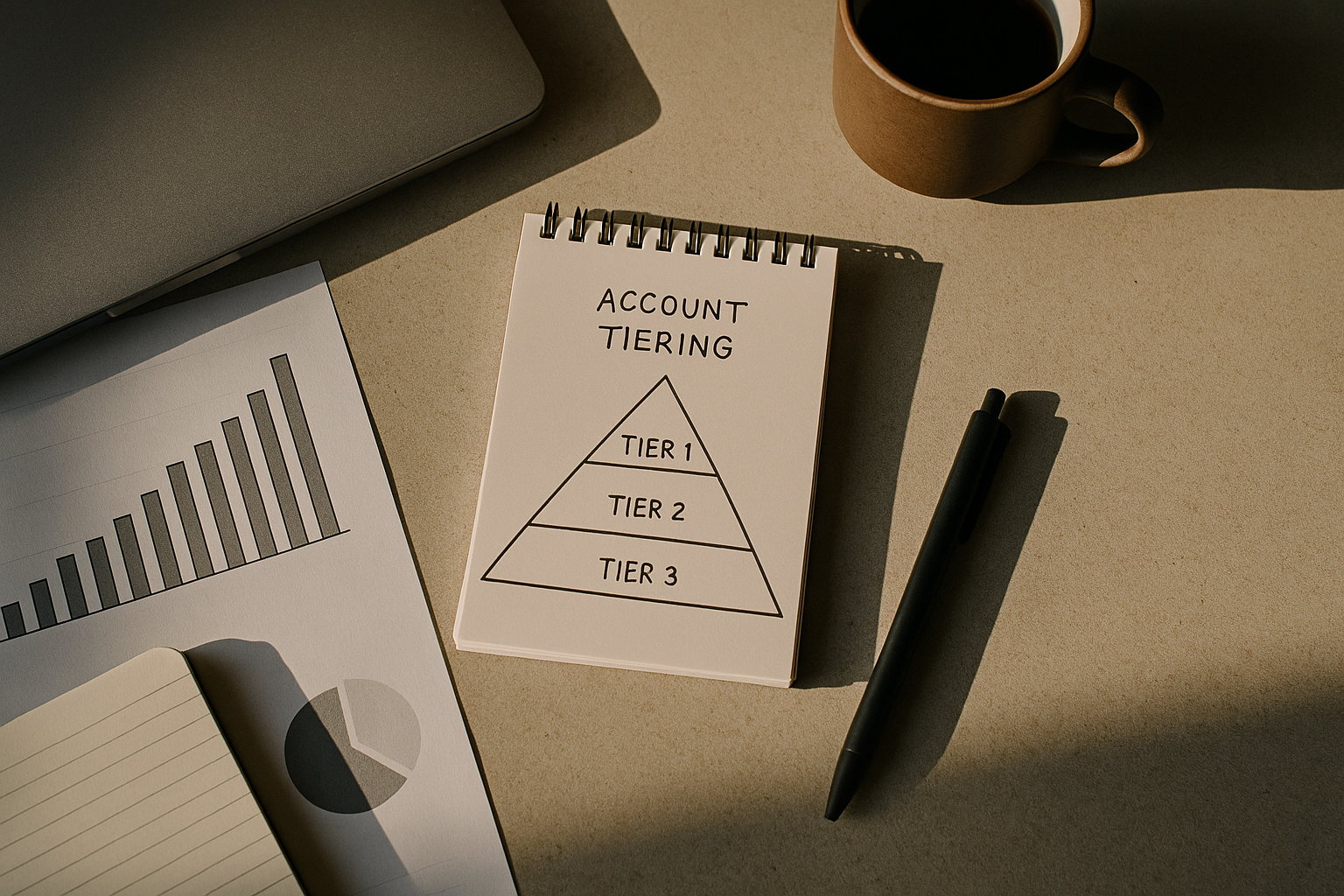
You sort your target accounts into three groups, usually called Tier 1, Tier 2 and Tier 3, based on how closely they match your ideal customer profile, how much revenue they could realistically generate, and whether they’re showing any signs of actually being in the market right now. Tier 1 gets your most personalised, most intensive attention. Tier 3 gets automated sequences and the occasional check-in. Neither group is wasted on; they’re just served differently.
The common mistake is confusing could buy eventually with is worth pursuing this quarter. A company can look perfect on paper, the right industry, the right size, the right tech stack, and still be completely wrong to prioritise if there’s no buying signal and no internal urgency. ICP fit tells you whether an account could buy from you. It doesn’t tell you whether they’re thinking about it right now.
How to assign tiers without overcomplicating it
You don’t need a scoring algorithm to start. Most teams do reasonably well with four criteria assessed honestly: revenue potential, fit with your ICP, current intent signals (job postings, recent funding, product searches, technology changes), and strategic value such as whether landing the account would open a new sector or serve as a reference. Score each loosely, combine your judgement with whatever data you have from tools like LinkedIn Sales Navigator or BuiltWith, and place accounts accordingly.
One practical constraint worth taking seriously: size your Tier 1 list to match what your team can genuinely serve at that level of attention, not to match the number of accounts you wish you could handle. Personalisation spread across fifty accounts produces the quality of work you’d do for twenty, at the cost of fifty. Ten to twenty accounts in Tier 1 is realistic for most small BD teams; scale up only when you have the capacity to back it.
The part most teams get wrong
Tiers go stale. A company that belonged in Tier 3 six months ago might be actively hiring for the exact function your product supports, which makes them Tier 1 today. Reviewing tier assignments quarterly is the sensible minimum, though for Tier 1 specifically a monthly sense-check is worth the small administrative faff, particularly in fast-moving markets where intent signals shift quickly.
There’s also a subtler error: using the same criteria to tier new business prospects and existing customers. For net-new accounts, fit and intent should drive placement. For existing clients, the right questions are about account health, expansion potential and renewal timing, which are entirely different variables. Mixing the two produces a tiering model that serves neither motion well.
And when an account grows, move it up immediately rather than waiting for the next quarterly review. Don’t make a growing customer wait to get better service. Moving accounts down is worth a grace period of one renewal cycle before you demote them, just to confirm the change is permanent rather than a temporary blip.
What you actually do differently per tier
- Tier 1: Bespoke outreach, senior involvement, detailed account plans, high-touch cadences with genuine personalisation at every touch.
- Tier 2: Semi-personalised sequences, regular but less intensive contact, monitored for signals that would justify promotion to Tier 1.
- Tier 3: Automated nurture, templated content, low time investment until a trigger fires that changes their status.
The discipline isn’t in building the tiers once; it’s in actually behaving differently across them, which requires your sales and marketing teams to agree on the same criteria and respect the same placements. A tiering model that lives in a spreadsheet but gets ignored in practice is just administrative theatre.