Tag: deal management

  • The Mutual Action Plan: Close Deals Without Chasing

    Most deals don’t die in a dramatic blaze of rejection. They just quietly stop moving, one unreturned follow-up at a time, because neither side had a shared picture of what needed to happen before anything could be signed. A mutual action plan is designed to fix that, and it’s a more straightforward idea than the name suggests.

    A mutual action plan (MAP) is a shared document, built jointly with your buyer, that lists every milestone, owner, and deadline between the current conversation and a signed contract. Not your internal close plan, which is just your own homework. A MAP is something the buyer has a hand in writing, which is precisely what makes it useful.

    Why it works when chasing doesn’t

    When a rep follows up for the fourth time asking “just checking where things stand,” the buyer hears someone who wants their signature, not someone invested in helping them get to yes. A MAP reframes the whole thing. You’re not chasing; you’re both tracking progress against a plan you built together. The follow-up email stops being “any update?” and becomes “you were going to loop in Legal by Thursday, do you need anything from us to make that easier?”

    Deals stall when nobody has a shared view of what’s actually blocking the close, so problems surface only after they’ve already cost weeks. A MAP drags those blockers into the open early, when there’s still time to deal with them, rather than discovering in week eleven that the security review takes a month and nobody budgeted for it.

    B2B purchases now routinely involve a dozen or more stakeholders across multiple departments. A MAP is one of the few tools that can hold all of that together visibly, without requiring everyone to be in the same room.

    What actually goes in one

    Keep it short enough that people will actually consult it. Somewhere between eight and twelve milestones tends to work; more becomes overhead, fewer and it’s too vague to catch real risk. Each milestone needs a named owner and a date, from both sides of the table.

    The seller’s team will have items too: security documentation, legal redlines, commercial approvals. Assigning those makes it genuinely mutual rather than a thinly disguised to-do list for the prospect. A working MAP typically covers the agreed go-live date (work backwards from this), key internal approvals the buyer needs to secure, any technical or compliance reviews, the paper process and who runs it, and the names of stakeholders who have to sign off at each stage. Tools like Dock, GetAccept, and Notion all work fine; so does a shared Google Sheet, if the information is clean and up to date.

    When to introduce it

    The right moment is usually after the solution presentation, once the buyer has seen enough to think seriously about feasibility. They’re asking themselves: what would Legal need? When could we actually go live? How do we get budget approved? A MAP answers all of those questions at once, which is why it tends to land well at that point rather than feeling like an imposition.

    The one rule that matters most: don’t build it yourself and send it over. Build it live, with your champion, during a call. Ask them to add steps, adjust timelines, reassign owners. Their willingness to do that is itself the most reliable signal you have that the deal is real. And if they shrug and say “just send me whatever,” that’s information worth having too.

    Frequently Asked Questions

    Is a mutual action plan the same as a close plan?

    No. A close plan is an internal document the buyer never sees, covering your own tactics for winning the deal. A mutual action plan is shared with the buyer, and both sides own tasks and deadlines within it. The two can coexist, but they serve different purposes.

    What if the buyer refuses to engage with a MAP?

    That reluctance is worth paying attention to. It may mean the deal isn’t as far along as it appears, or that your contact doesn’t have the internal authority to commit to a timeline. Either way, surfacing that early is more useful than discovering it at the end of the quarter.
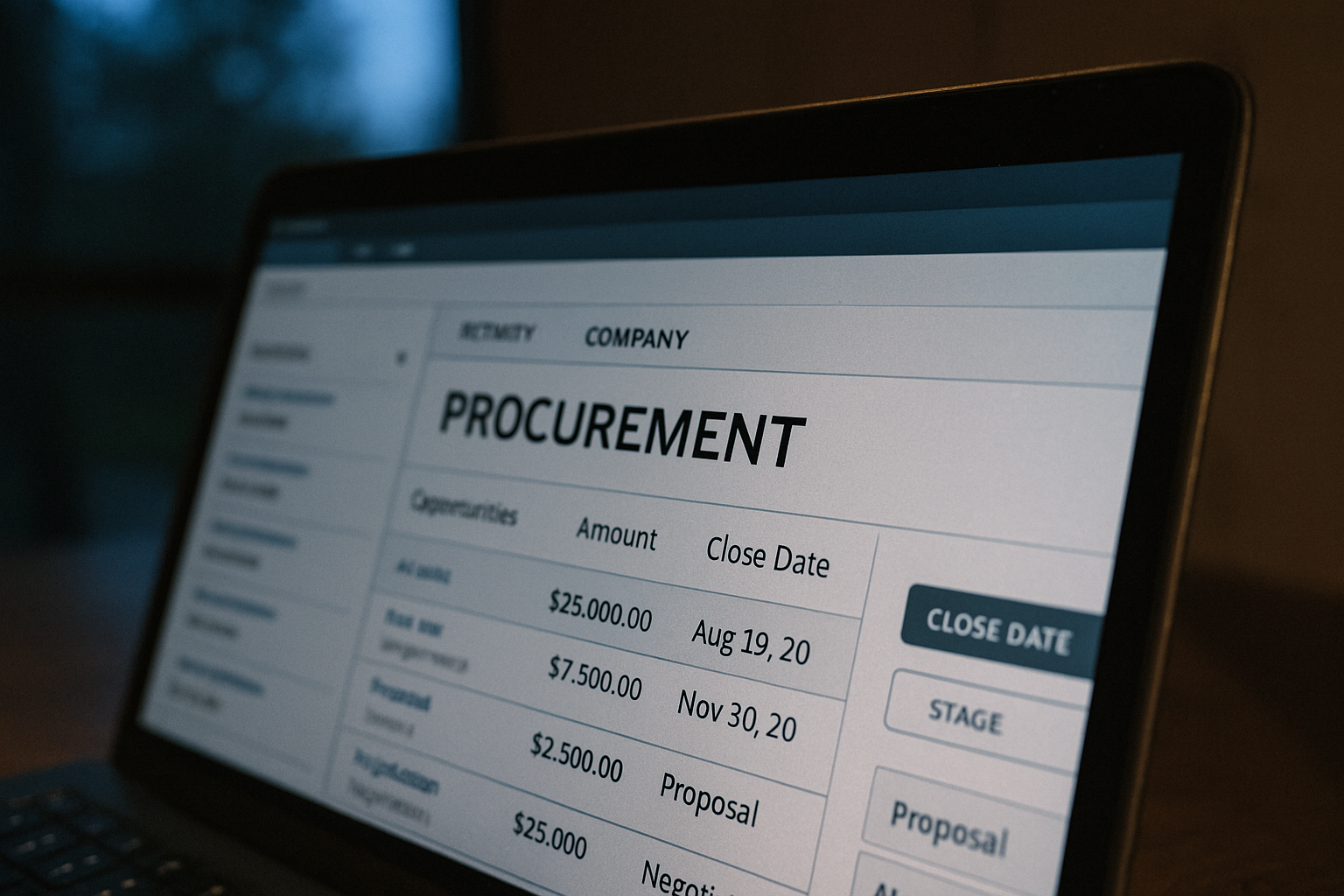
  • When Procurement Joins the Deal Mid-Way

    When Procurement Joins the Deal Mid-Way

    What procurement actually wants from you

    Procurement entering a deal you thought was nearly closed is a particular kind of unwelcome surprise, like a second interviewer walking in twenty minutes after you thought the job was yours. You’ve spent weeks building a relationship with the person who actually feels the problem, they’re enthusiastic, the commercial outline is agreed, and then a message arrives asking you to resubmit everything to a procurement portal by Friday.

    The instinct is to treat procurement as an obstacle, and that tends to produce exactly the adversarial dynamic sellers dread. Procurement teams aren’t trying to kill deals; they’re trying to protect their organisations from bad ones, and from sellers who overpromise. Understanding that shift in motive changes how you approach the conversation.

    Your business champion cares about outcomes: the problem gets fixed, their team’s life improves, they look good internally. Procurement cares about something adjacent but distinct: can this supplier be trusted, are the terms defensible, and does the price reflect genuine market value? They’re evaluating you rather than your product, so the materials that persuaded your champion, the demo, the case study, the ROI story, often land flat with a professional buyer who has seen every flavour of vendor enthusiasm.

    What tends to work is giving procurement what they’re actually trying to build: a clear, written rationale for choosing you over alternatives. That means a crisp summary of the commercial terms already discussed, your standard contract redline position so legal review doesn’t start from scratch, any relevant compliance documentation (ISO certifications, security questionnaires, data processing agreements), and a plain-language explanation of what differentiates your offer at this price point. Procurement won’t always tell you what they’re optimising for, so it’s worth asking directly: budget ceiling, payment terms, contract length, or something else entirely?

    Don’t lose your champion

    The most dangerous thing that happens when procurement arrives is that sellers shift all their attention to the new stakeholder and go quiet with the business champion. That champion stops feeling like a partner and starts feeling like a bystander, which matters because most of the internal conversation still happens in rooms you’re not in. Keep them updated, send them short summaries they can forward, and be explicit that you need their continued support to get the deal across the line.

    It’s also worth asking your champion what they know about how their procurement team actually operates. Some organisations use it as a genuine strategic function that can accelerate deals if properly engaged; others use it primarily as a lever to extract a late discount. Knowing which situation you’re in shapes how much energy you invest, and in what direction.

    The discount conversation

    Almost every procurement team will ask for a price reduction. It’s not personal, and it’s not necessarily a sign the deal is in trouble; for many buyers it’s simply expected behaviour, a box to tick before they can sign off internally. When the request comes, it’s worth asking what they’re actually trying to achieve: a lower unit price, a longer payment term, additional scope at the same cost, or a smaller initial commitment with an option to expand. Each of those has a different answer, and most of them aren’t the same as simply cutting your margin.

    If you do move on price, get something in return: a longer contract term, a faster signature date, a reference customer agreement, an expanded scope. Procurement respects reciprocity. A seller who concedes immediately without asking for anything signals that the original price was inflated, which only encourages further pressure.

    Get ahead of it next time

    The best version of selling to procurement is when you’ve already anticipated their involvement rather than scrambled to respond to it. Early in any significant deal, ask your champion directly: will procurement be involved in approving this, and if so, at what stage? That one question, asked without alarm, lets you prepare the right documentation in advance, introduce yourself to the procurement contact before the pressure is on, and avoid the jarring reset that comes from treating them as a late arrival rather than a planned stakeholder.

    On enterprise deals, buying groups routinely include ten or more people, and procurement typically enters the conversation in the first third of the evaluation rather than at contract review, even if sellers don’t always know it. The organisations that close these deals reliably are the ones that have already thought about what each stakeholder needs, long before anyone sends the first RFQ email.